
Understanding Wood Plastic Composite (WPC): The Future of Durable Design
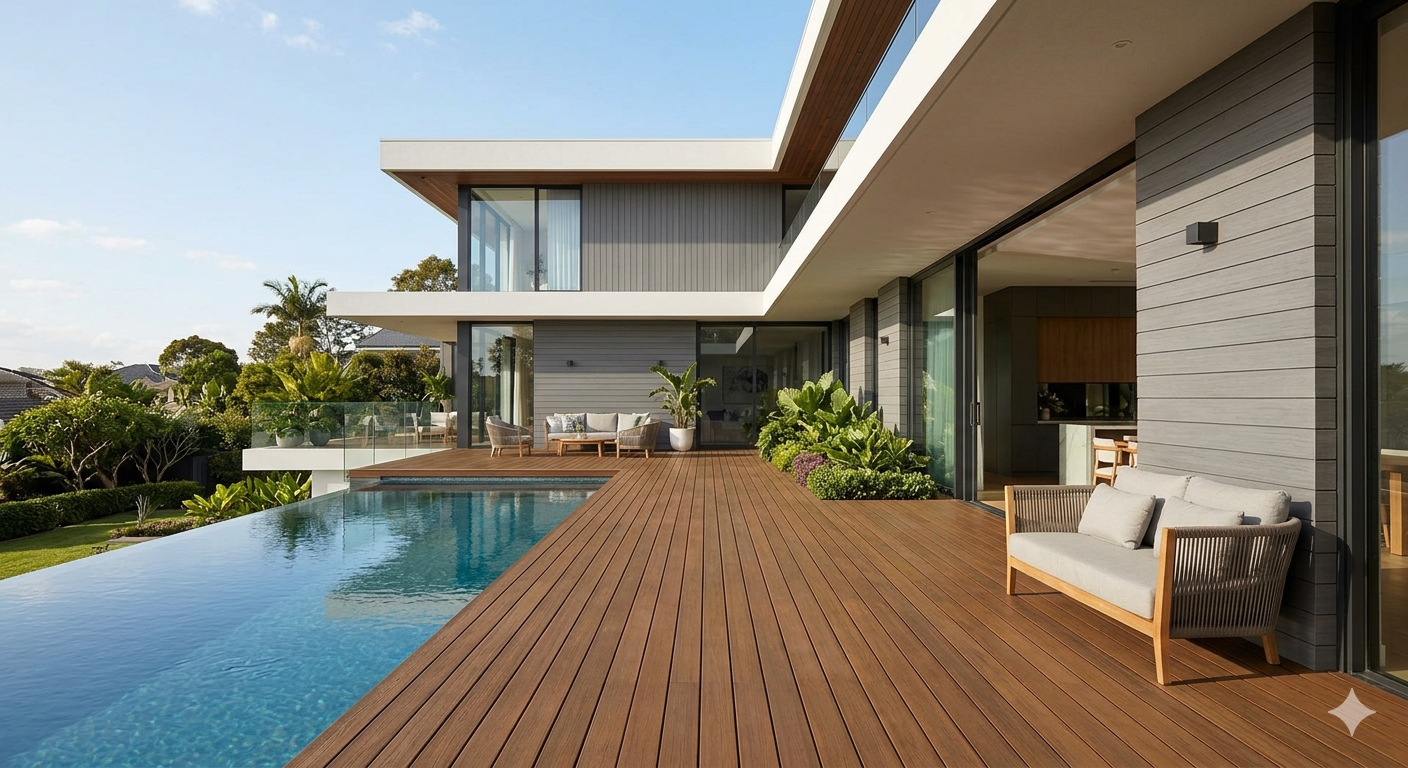
In the world of modern construction and interior design, Wood Plastic Composite (WPC) has emerged as a powerhouse material. It effectively bridges the gap between the rustic charm of natural wood and the indestructible nature of modern polymers.
Whether you're looking to renovate a backyard deck or install durable wall cladding, here is everything you need to know about WPC.
What Exactly is WPC?
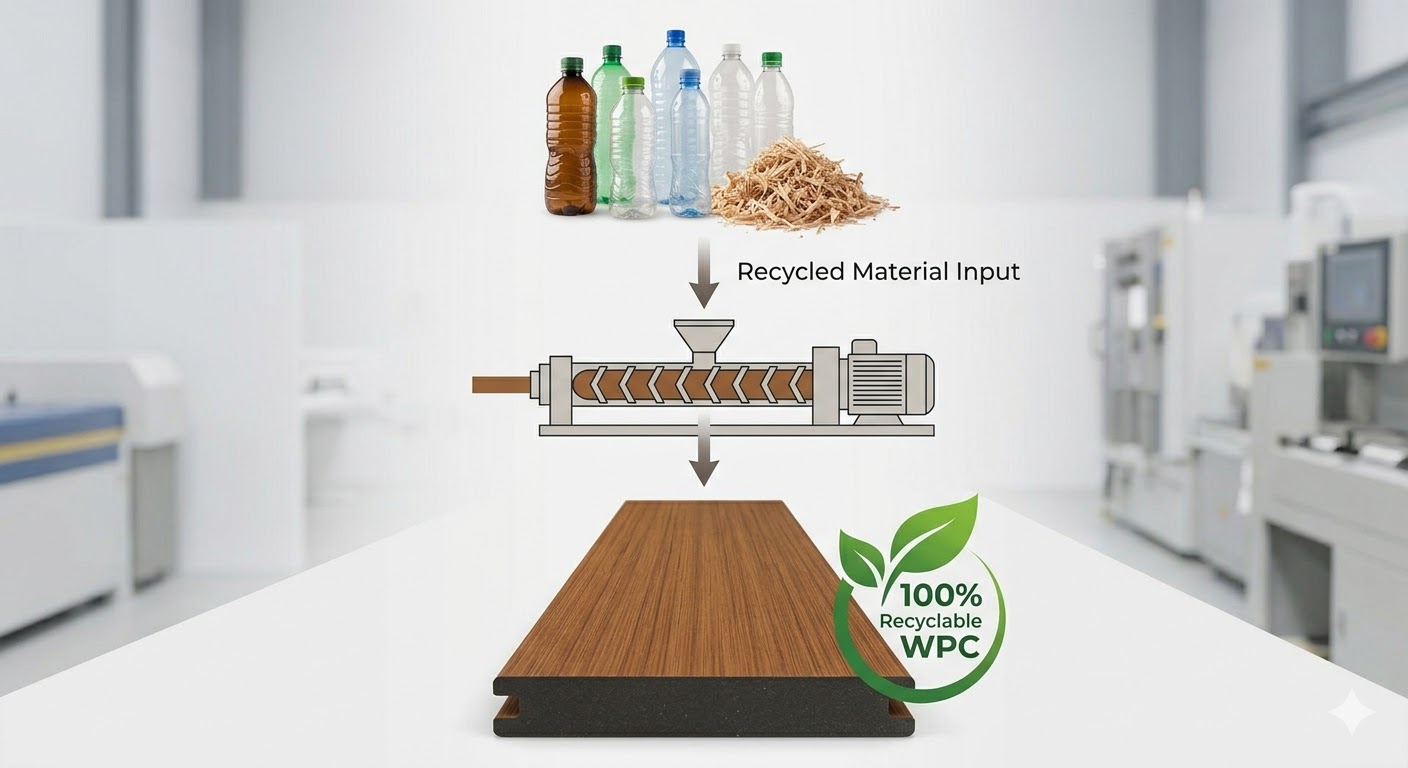
Wood Plastic Composite (WPC) is a hybrid material composed of natural wood fibers (usually sawdust or wood flour) and thermoplastic resins (such as PE, PP, or PVC). These components are mixed with chemical additives—like UV stabilizers and pigments—and then extruded or molded into various shapes.
Think of it as the "best of both worlds": you get the warm aesthetic of timber without the constant headache of rot, pests, and maintenance.
The Key Benefits of Using WPC
WPC has seen a massive surge in popularity for several very practical reasons:
1. Exceptional Durability
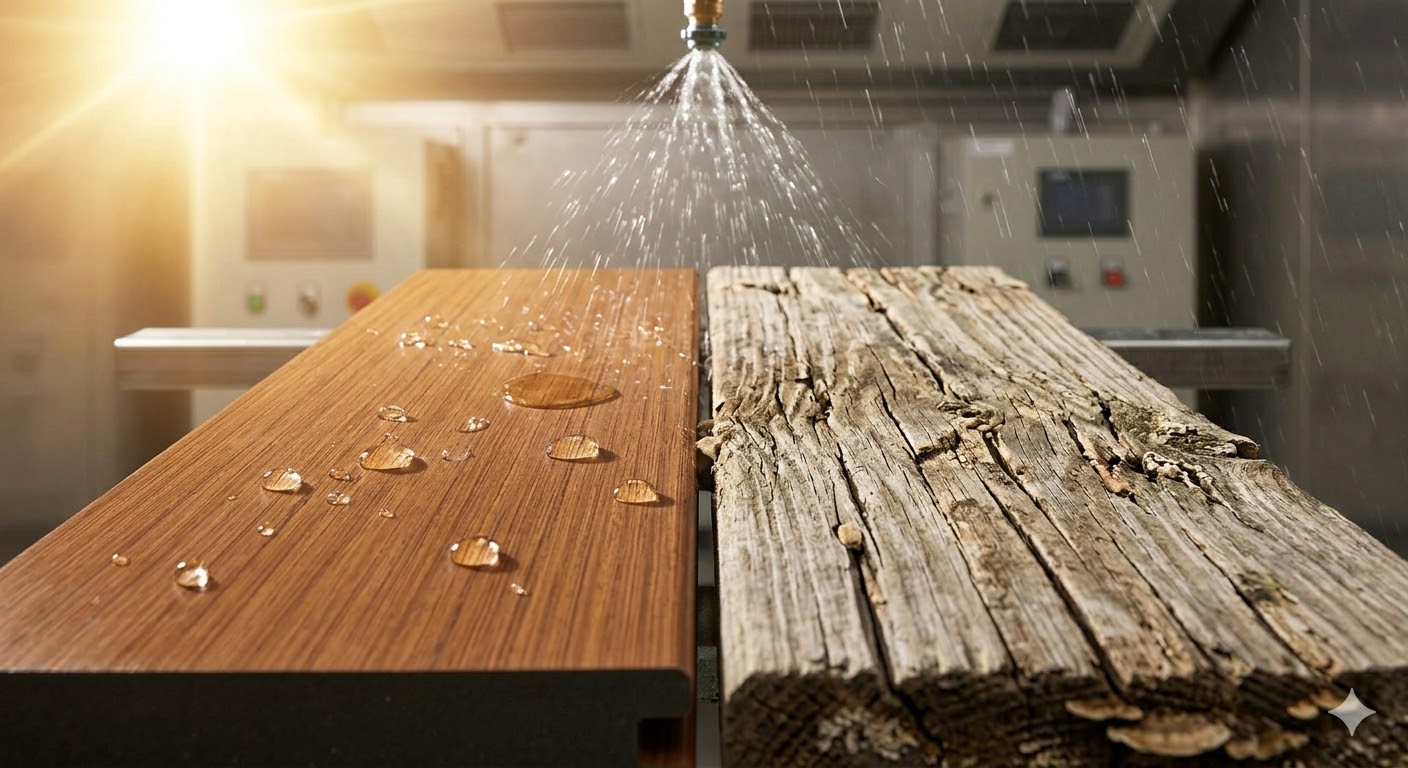
Unlike traditional timber, WPC is highly resistant to the elements. It doesn’t absorb moisture easily, which means it won't warp, crack, or rot over time. It is also naturally resistant to termites and other wood-boring insects.
2. Low Maintenance (The "Install and Forget" Factor)
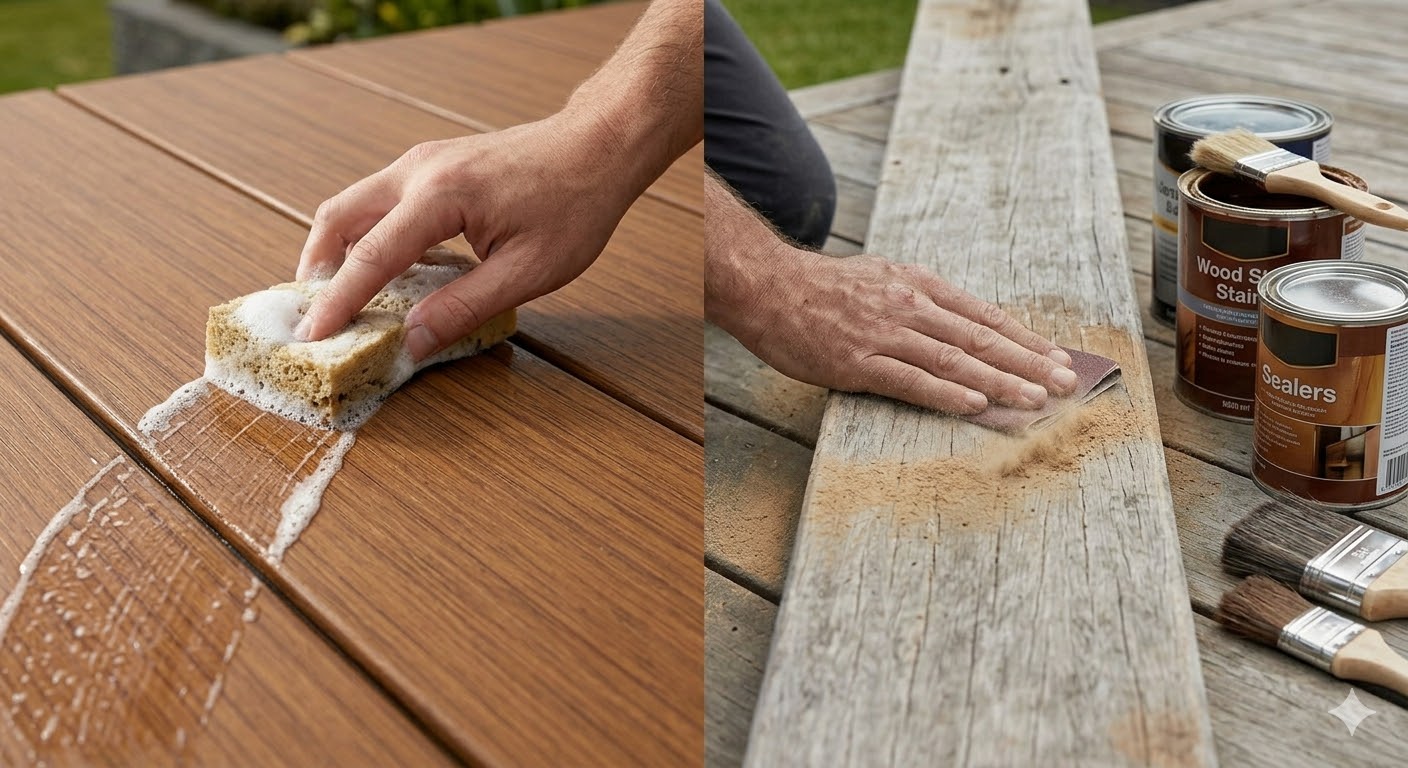
This is perhaps the biggest selling point. Natural wood requires annual sanding, staining, and sealing to stay beautiful. WPC, on the other hand, only needs an occasional wash with soapy water. It holds its color significantly longer than stained wood.
3. Eco-Friendly and Sustainable
WPC is a win for the environment. Most WPC products are made from recycled materials—utilizing waste wood from furniture factories and recycled plastics that would otherwise end up in a landfill. Furthermore, it reduces the demand for virgin timber, helping to preserve forests.
4. Safety First
If you've ever walked barefoot on an old wooden deck, you know the fear of splinters. WPC is manufactured to be splinter-free. Additionally, many WPC boards are designed with slip-resistant textures, making them ideal for pool decks and wet areas.

5. Versatility in Design
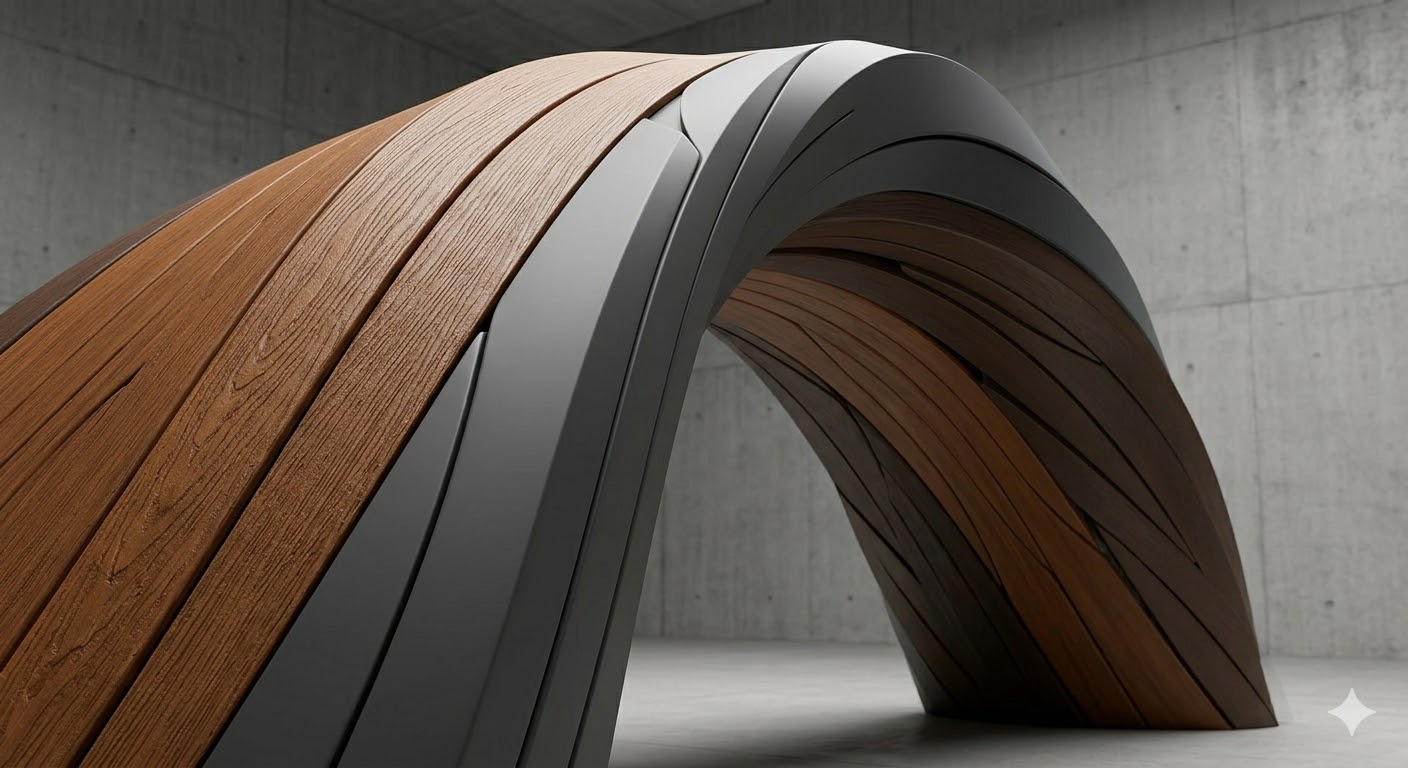
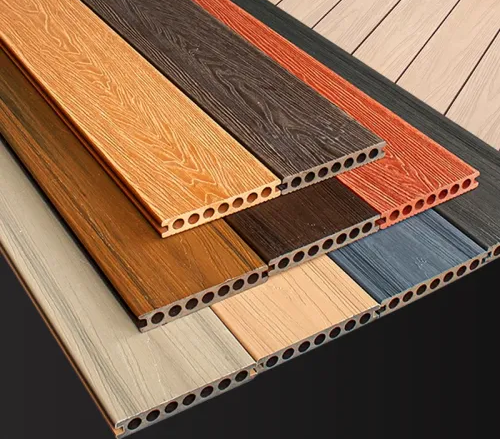
Because it is a manufactured product, WPC can be created in a wide range of colors, textures, and grain patterns that natural wood cannot always provide consistently. It can even be curved or molded for unique architectural designs.
Common Applications
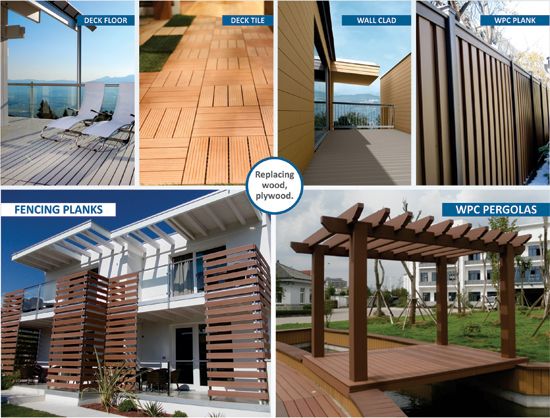
WPC isn't just for floors. Its versatility allows it to be used in:
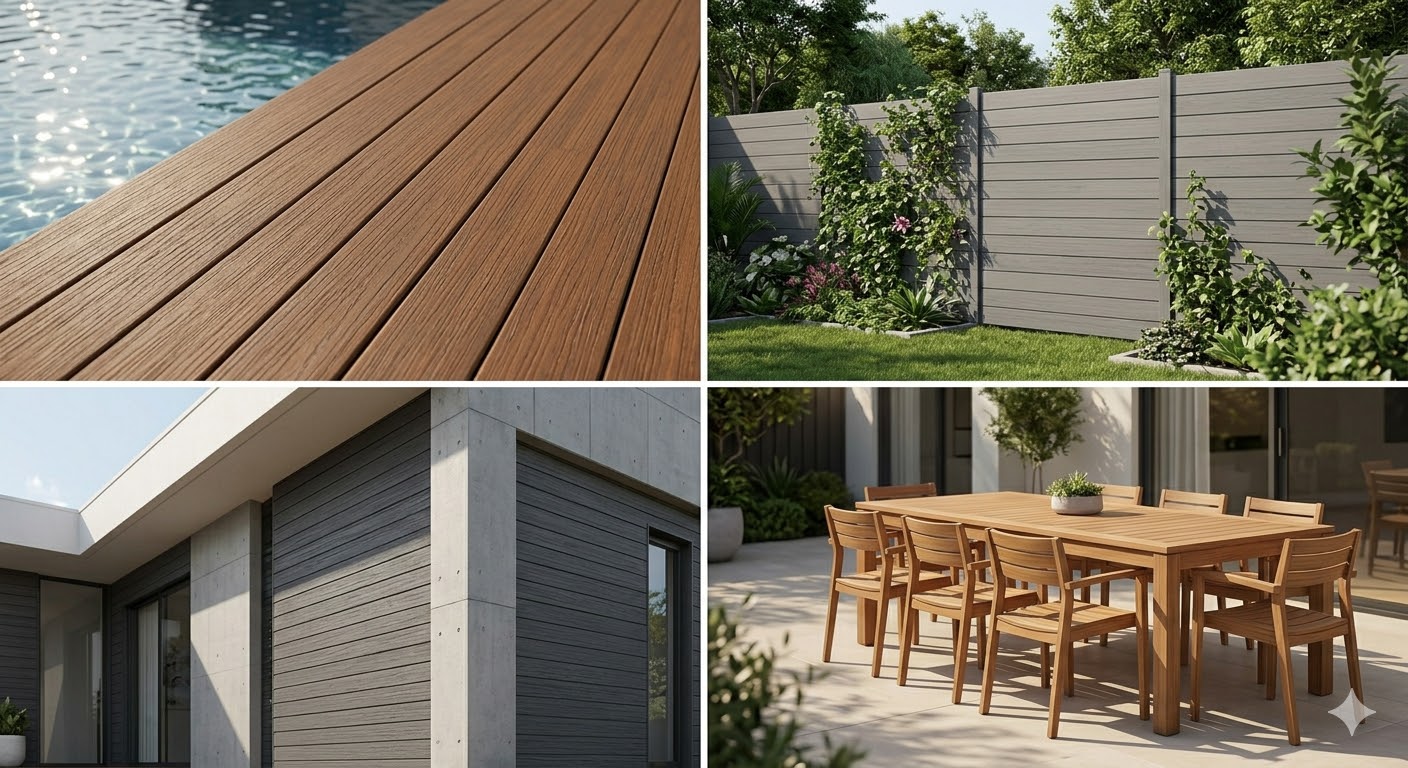
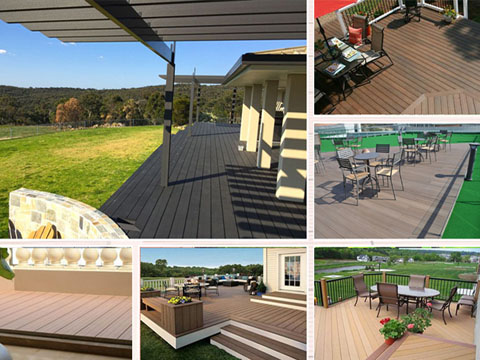
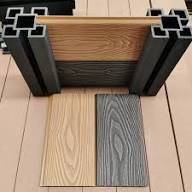
Outdoor Decking: The most common use.
Fencing and Railing: For a long-lasting perimeter.
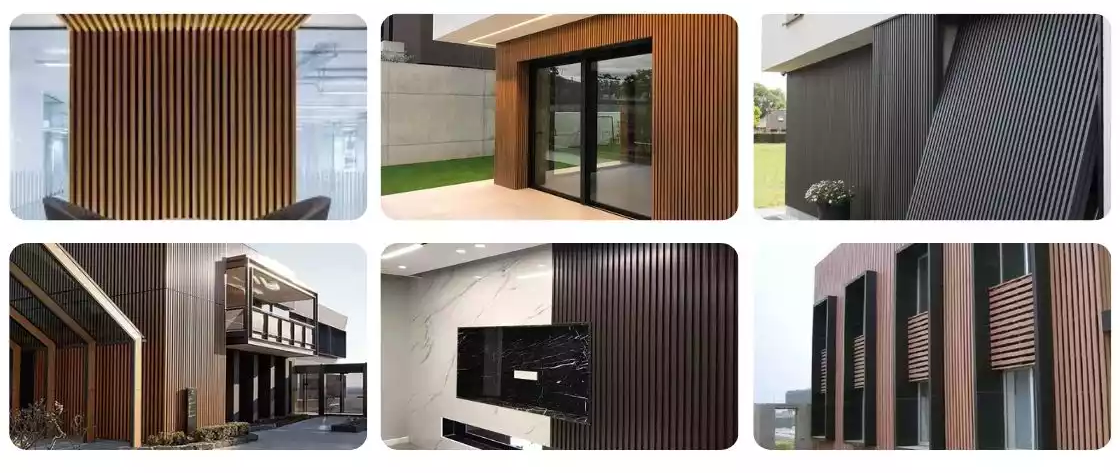
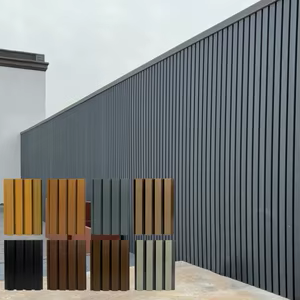
Wall Cladding: Adding a modern look to building exteriors.
Outdoor Furniture: Park benches and tables that can withstand rain and sun.
 |
 |
 |
 |
 |
|
 |
 |
 |
 |
 |
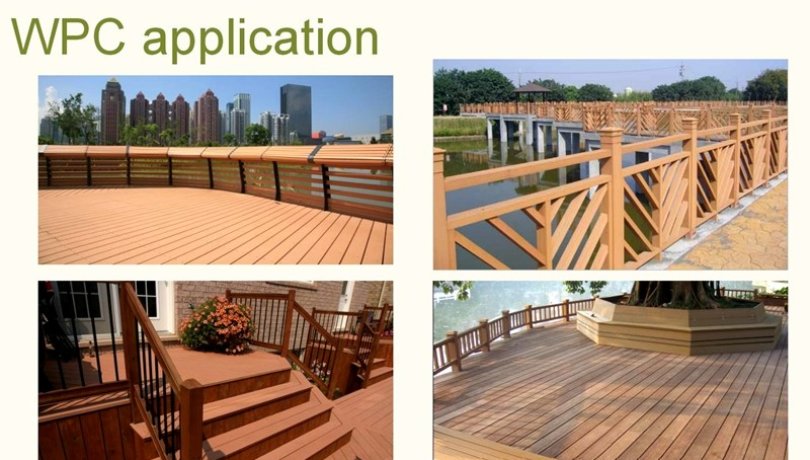
Decking |
Cladding |
Fencing |
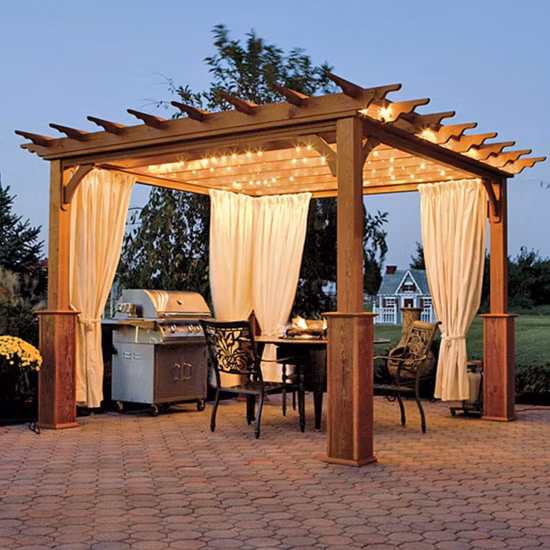
Pergola |
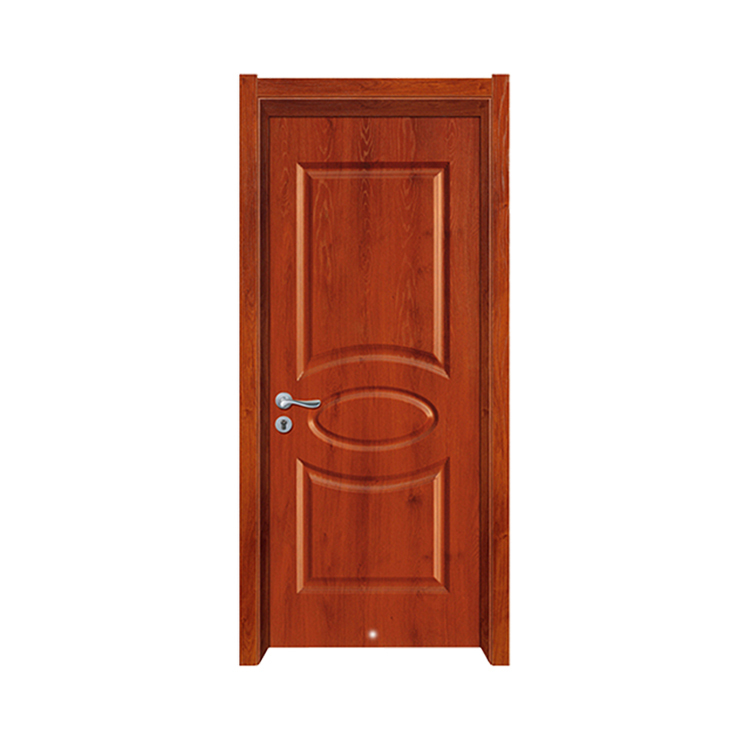
Doors |